Thursday, April 20, 2006

Jakarta Ball Baby


Emmerson with her ball

Emmerson's favorite object of late is the ball. Any round shape engages her attention and results in a chorus of "ball, ball!" We went to the Sport Mall the other day for a walk about. The Sport Mall, where "Shopping is sport",(see previous entry Jakarta Mall)inspires not only hard core shopping but houses a large arena that hosts various events including basketball. Upon arrival at the mall we went upstairs to the arena where there were a bunch of guys practicing. Emmerson went crazy and began her ball mantra. One of the guys heard and rolled a basketball to her. She patted it and then crawled onto the court. I scooped her up and took her out of the arena back into the mall. When I put her down she immediately did an about face and headed back towards the arena chanting "ball, ball". I picked her up again and carried her squirming and grumping back into the mall. When I finally put her down she made a bee line back to the arena. So I picked her up and carried her downstairs to the supermarket hoping that the distance and the attraction of the supermarket would make her forget about the balls. Wishful thinking; when I put her down and she got her bearings she began trying to make her way back to the arena. Finally I put her in a shopping cart and gave her an orange. She grumped a bit so I took her out of the cart. She took the orange, tried to bounce it on the floor and then pointed at the forlorn orange and said "ball, ball".


Stalking another ball in Bali.

Friday, April 07, 2006

Jakarta to Bangkok to Chang Mai


At the Elephant Sanctuary

Elephants are a big attraction in Northern Thailand and like many tourist attractions, not without some controversy. Recently the Thai government banned logging in Thailand which put several thousand elephants and their mahouts (handlers) out of work. Elephant owners were now stuck with non earning, expensive animals that require a tremendous amount of food and care. Some continued to use the elephants to log illegally, others went into the tourist business. The "tourist elephants" ply their trade all over Thailand in a variety of forms; trekking elephants, trick performing elephants, and Bangkok begging elephants are the most common. Unfortunately many of these elephants are abused and live miserably; an elephant should not be walking around the streets of Bangkok for certain.

Enter in Lek, the founder of Elephant Nature Park. She has created a sanctuary that rescues sick, abused, and otherwise needy elephants. Their goal is to change the structure of the Thai elephant tourist trade to a more interactive format where visitors can interact with the elephants going through their daily routine rather than watching them perform or taking one for a brief ride. At the sanctuary you learn the story behind all of the elephants (some rather shocking tales of abuse and misuse - one was a meth addict - forced to take the drug so it could extend its work hours, another blinded, one who stepped on a landmine, etc). Lek brings in the elephants, rehabilitates them and tries to raise enough money to buy them from the owner. She has succeeded in forming a herd of about 40 elephants. They do not work anymore. In order to get the elephants to the point where they are trainable enough to work, whether its logging, performing, or trekking, a "breaking" procedure is conducted. I won't go into details but it is three days of brutal treatment done to the elephants when they are young. We saw a video of it and it was hard to watch. Lek's idea is to stop making work elephants - they are not needed anymore as the logging industry is finished. She wants the elephant attractions in Thailand to be an experience where people can come and pay a fee for a day of interacting with the elephants living a relatively "normal" life at sanctuaries. We had a great day at the park and I highly recommend a visit.


A white elephant. Its reddish color is due to the color of the dirt that they are constantly rubbing themselves with. Even so he was considerably lighter than all the other elephants. White elephants are quite rare and many end up belonging to the King of Thailand’s royal herd.


A portion of the elephants daily food. We loaded two pick up trucks full of pineapples, bananas, corn, and pumpkins.


The elephants were impressively nimble with their trunks and shockingly powerful with their mouths. They could pick the prickly leaves off the top of a pineapple and crush a pumpkin with their lips


Up close with an elephants mouth.


A three month old with her mom. She also had a nanny who was always close by. There was an occasion when one of the juvenile males got to close to the baby and the mom and nanny let him know in a very aggressive manner that he was not at all welcome. They ran into him and then chased him to another part of the compound. He took out his frustration by pestering the 85 year "old dame" of the group. She patiently endured this annoyance. Another time the baby wandered away from the protective couple. They trumpeted several times and when the baby did not respond they began tearing around the compound looking for her.


Little baby with the elephants and a left hand sticker.

Scenes from Chiang Mai


Fresh veggies at a market in Chiang Mai. The food scene in Thailand is incredible. Street food is delicious, cheap, safe and plentiful


Cooking class in Chang Mai - I was charged with mortaring and pestaling the red curry paste while the instructor mocked my skills.


Skills 


The broom lady. Sweeping is serious business everywhere I have been in Southeast Asia.


The family house in the Baan Orapin Bed and Breakfast in Chiang Mai. Wonderful place to stay.


Little baby in the tub.


The view from the train between Chiang Mai and Bangkok. It is about a 13 hour ride. I did it during the day as I wanted to see the scenery but many people get a sleeper and do the trip at night. It cost me about $10 US. About 6 hours of the trip is in the "rice bowl" of Thailand, the fertile, well watered plain that makes up most of central Thailand. As you pass mile after mile of brilliant green rice fields you begin to see why Thailand is the number one exporter of rice in the world. I believe I had a second class ticket and the car was quite comfortable. It was air-conditioned but got a little warm in the heat of the day. We had ceiling fans to turn on to create an extra breeze. There was an attendant on board who handed out food and drink a few times. The train stopped at many towns and cities on the way which was a nice change in scenery from the endless plains. When the plains end as you near Chiang Mai, the landscape turns to hills with scrub brush and then forests. If you are the type of person who can stand sitting around without doing much and enjoy trains I recommend the trip - type A personalities take the plane.

Scenes from Bangkok


Alicia successfully thwarting the "I'm sorry its closed but I can take you to a special showing only taking place today - its just a short ride away and doesn't cost much - then I can take you to some secret gem stores and maybe you like a massage later?" scam. She told us the palace was closed due to a royal reception but she could take us on a tour of something else and then get us in for a special tour a little later blah, blah. Suddenly her relative showed up and was volunteered to be our driver wherever we were going. I said we don't want to go to any of those places. She she seemed genuinely shocked and asked why not! She didn't give up until I looked down the sidewalk a ways and saw people entering into the palace at another gate. She left us at that point and went after another potential victim. Notice how concerned the guard is about the obvious scam taking place.


Three generations of lovely smiles.


Bangkok is built in, on and around the Chao Phraya River. Canals known as "klongs" wind there way through the city and are traditionally the center of Bangkok life. A great trip is to take a long tail boat back into the klongs where many of the old residential neighborhoods exist.


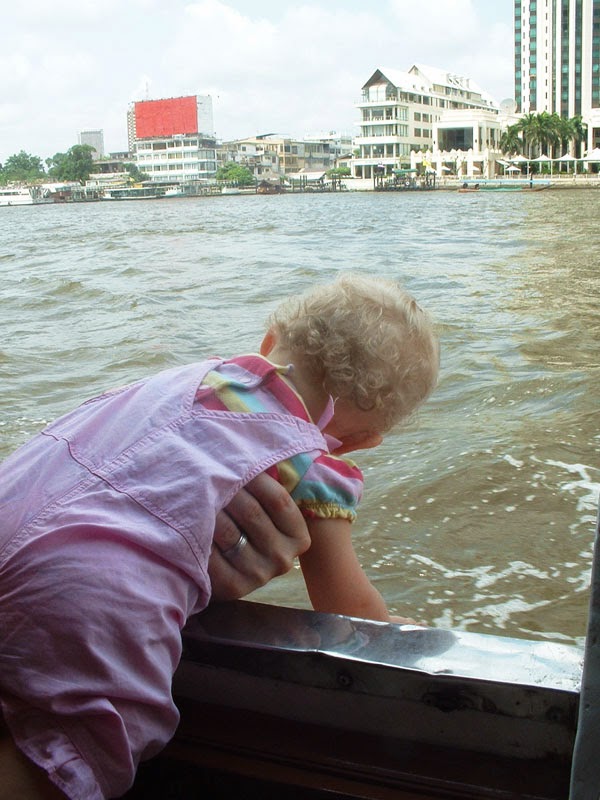
Swag hat, baby and left hand on the klong.


The ubiquitous Bangkok tuk-tuk.

Thursday, April 06, 2006

Jakarta Mall Revisited

I wrote previously about the Jakarta mall scene in general and some activities there concerning public displays of personal hygiene that might be considered curious to the uninitiated. Recently I have experienced a few more mall offerings related to body care that challenged my sense of the public versus the private. The giant new Hypemart in Kelapa Gading hosts a number of foot care stalls proudly displaying clients soaking their feet in vats of what looks like jelly with bits and chunks of unidentifiable stuff floating about. There is no attempt to shield the customers from the curious eyes of passer byes; on the contrary they are placed on display presumably to tempt potential foot weary shoppers to stop by and have a soak. Surrounding the stalls are posters showing larger than life blown up images of feet soaking in the buckets of substance flecked goop. I actually avert my eyes when I walk by these stalls because the photos are disturbing. Feet immersed in a crusty liquid, especially when blown up beyond life size, are not a pleasant site.

Today I saw another disconcerting site involving what I consider personal hygiene proudly displayed in front of a pharmacy, again presumably to lure those strolling by to stop and take a closer look. It was a video of a person clipping their toe nails with what I am guessing is a fabulous new device designed to clip toe nails in a way that toes have never been clipped before.

I have been here long enough to adapt to various aspects of Indonesian culture, many I am sure subconsciously. Maybe in time I will be reclining in mall stall chair having my nose hairs tweezed while a camera feeds a live video of the grooming to a large screen TV for the convenience of passer byes who might want to consider the experience.

Sunday, February 19, 2006

Jakarta Beginnings: Sunda Kelapa Harbour

Sunda Kelapa Harbour

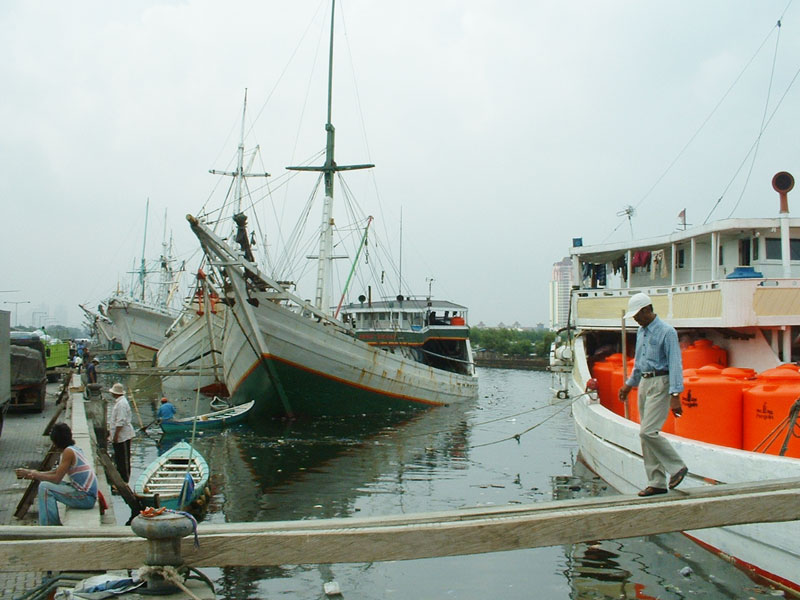
The nearest most tourists ever get to Jakarta is a stopover at the airport in route to Bali. But it does have a few places tucked away here and there where the intrepid traveller or the Jakartan who simply can not stomach another trip to the mall might consider visiting. Sunda Kelapa harbour and its immediate environs is one such place. It is where the Dutch first set up shop and was a hotspot back in the days when spices of the south seas were a driving force in the burgeoning global economy. Eventually the area was abandoned by the Dutch. They moved inland to escape the disease and squalor of the low lying area. The port remained as a primary trading venue until the modern facility at TanJung Priok was built 20 kilometers away to accomodate the hulking bulks of modern day ocean going vessels. But Sunda Kelapa continues to be a vibrant port today dealing in interisland trade primarily between Jakarta, Sulawesi and Kalimantan. The centuries old traditional shipping routes are still followed and ancient methods of naviagtion practiced; the captain's deck is not equipped with modern day navigational equipment. The ships, known as bugis pinisi, are made by hand out of iron wood. Iron wood is soft when wet and thus pliable but dries into a very hard, durable wood. The schooners now use diesel engines but the sails are still in place just in case the 300 horsepower (about the size of the engines in Chevy pick up truck) engine conks out. Diesel power has cut the trip from Jakarta to Kalimantan, one of the main routes, from about a month to 3 days. The harbour is open to the public, the atmosphere is pretty laid back and it is possible to get up close and personal with the action. You can actually arrange to make the journey on a schooner through agents of the tourist department milling around the harbour. It would certainly be an interesting alternative to Bali for a long holiday weekend - sailing the south seas with the Bugis.
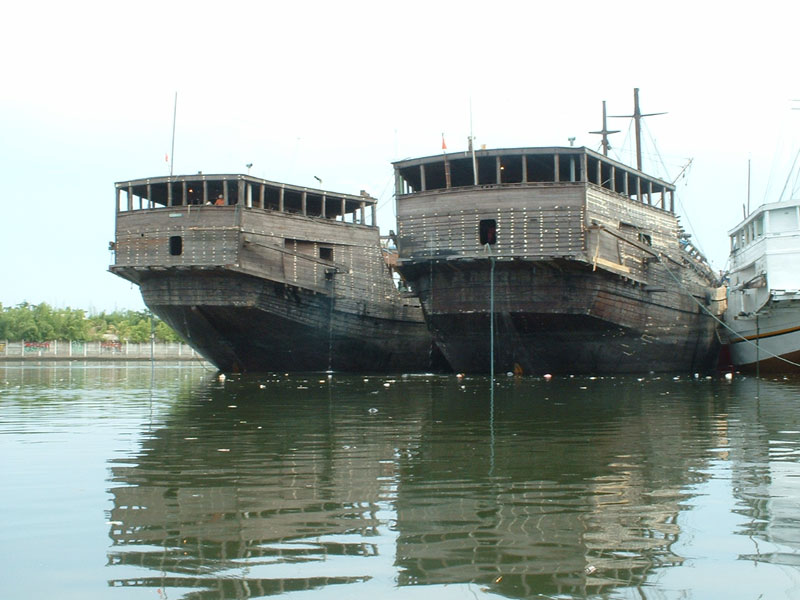
Two brand new Bugis Pinisi looking very pirate shippish. There were three brand new ships docked in the harbor when we visited. They take about two years to build and cost about 200,000 $ US. The ships are made in Sulawesi then sail to Sunda Kelapa harbour where they are painted before beginning their carreers. These beauties were waiting for their cosmetic makeovers.
Another view of the new ships. They can sail for 50 years before they are required by law to undergo a complete overhaul.

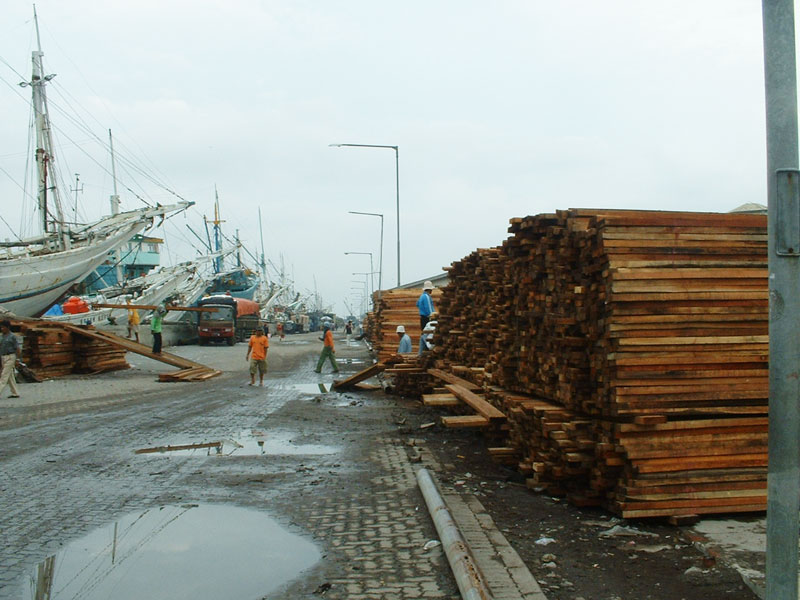
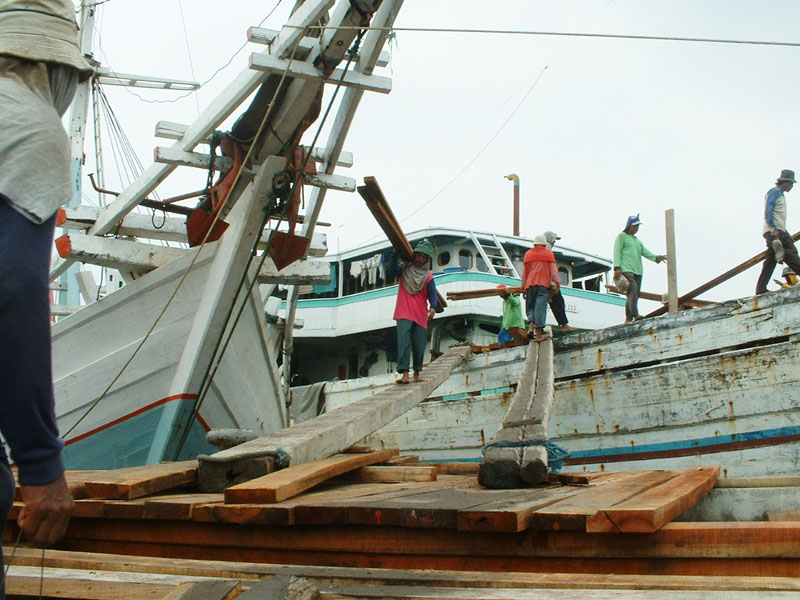
A view of the Bugis schooners lined up waiting for loading and unloading. The primary trade is in lumber from the islands coming to Jakarta and cement, flour, cloth and other processed items going outward. The wood is of secondary quality and is used in housing construction for frames and such. The top quality timber is exported internationally. According to one of the harbour fellows we chatted with, the stacks of lumber are quite smaller than in recent years when illegal logging in Jakarta was much more prevalent. Now most likely the illegal timber trade avoids high profile places like all together and involves more clandestine distrubution facitlites.

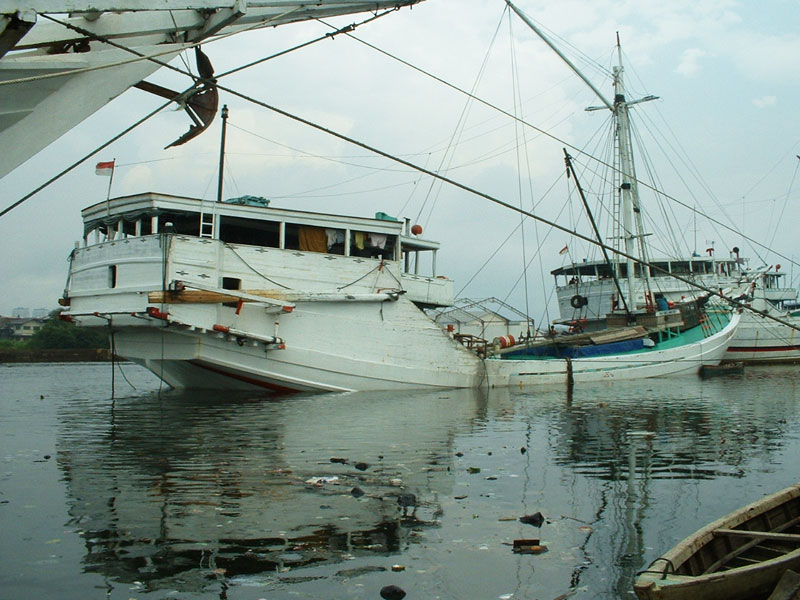
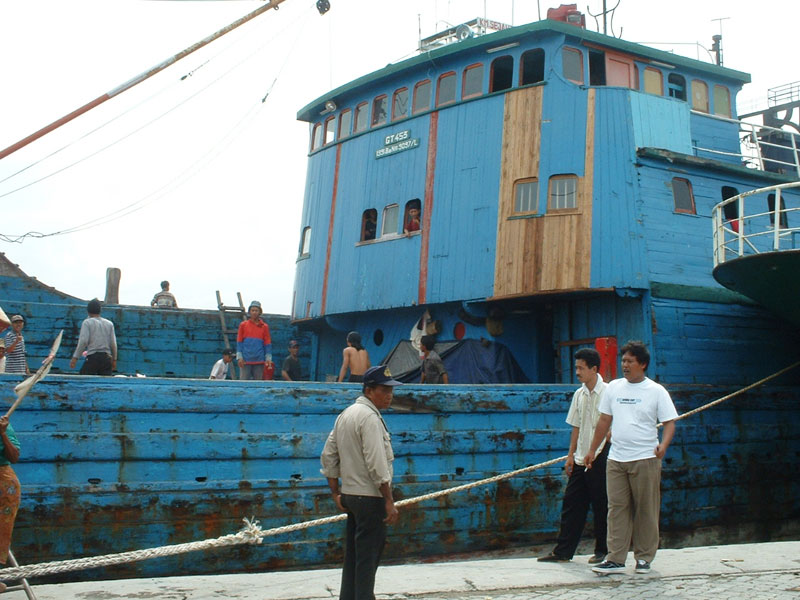
Low rider. Fully loaded with bags of cements and ready to make the return trip to Kalimantan. Cargoes of cement are a bit tricky due to the posibility of the cement taking on water and dramatically increasing in weight - not a good thing when riding that low. The long board strapped to the back right side (starboard stern??) of the ship is the rudder that is used if and when the boat is forced to rely on its sails for power.
Walking the gang plank with another low rider in the background.

All the loading and unloading is done by hand. The labourers live in a village nearby and work 10 hour days. They earn about 15 dollars a day - bit more if unloading cement - due to the unpleasant combo of sweat and cement dust. These guys were unloading lumber.
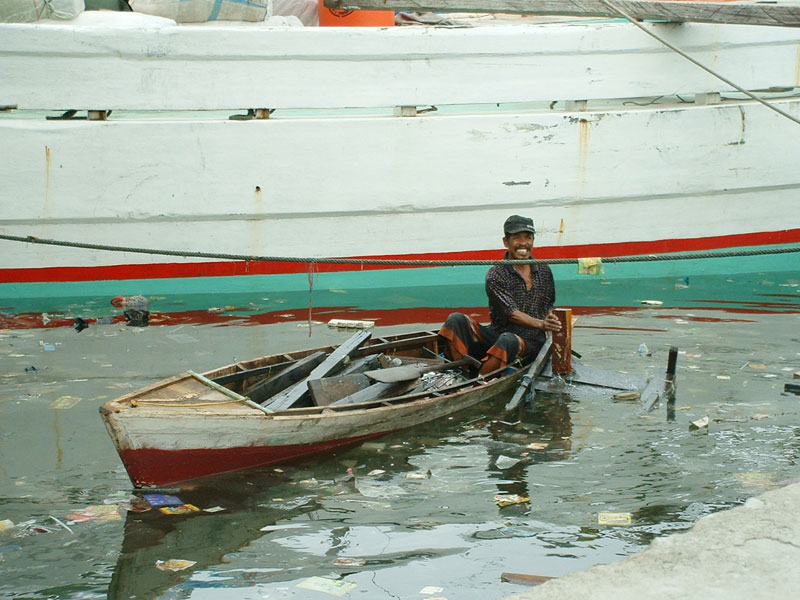
One man's trash is another man's treasure. A local gathering driftwood floating among the flotsam.
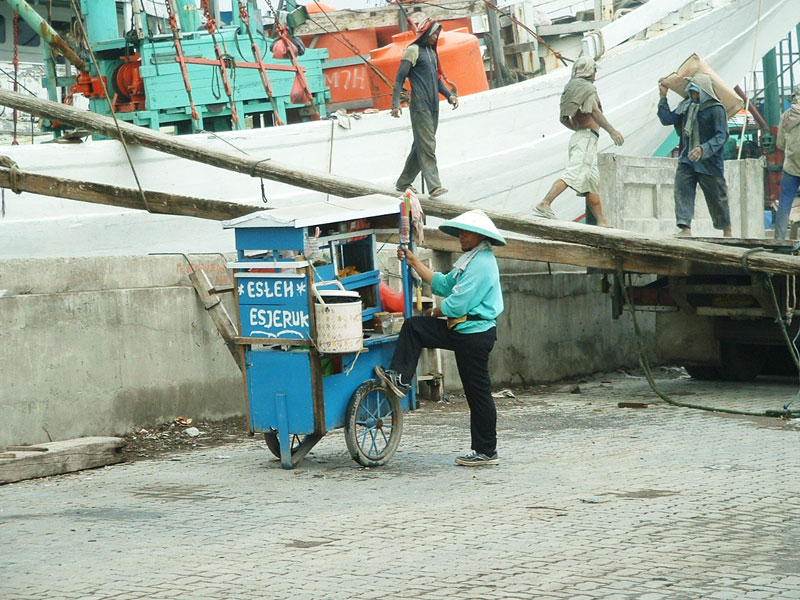
A purveyor of iced juice waits for a break in the action and potential customers from the cement crew.

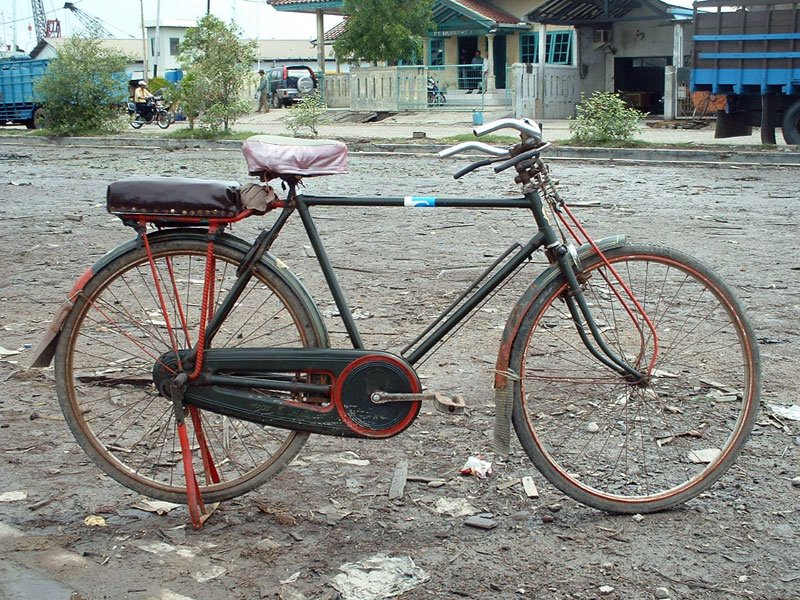
Old school bicycle

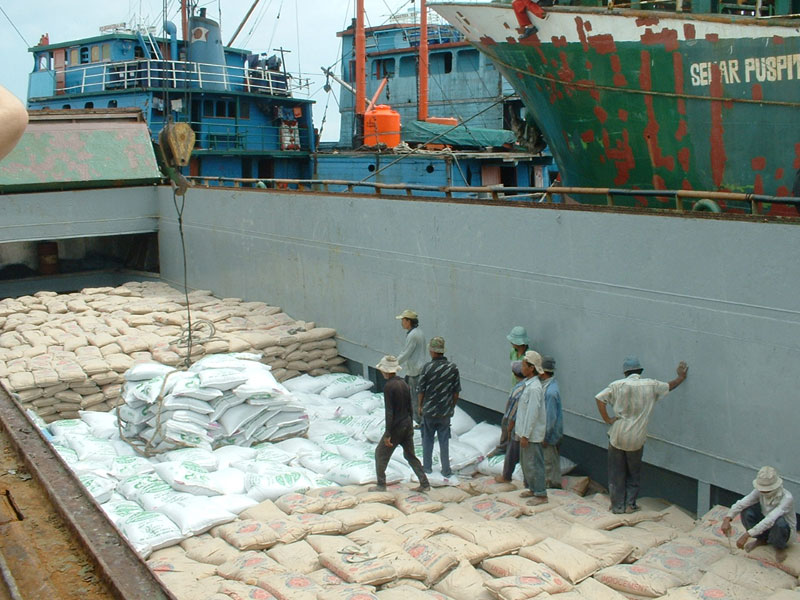
On the other side of the harbour are larger boats. The work is done by a combination of hand labor and machines.

Down in the hold of a ship, workers unload another crane full of cement bags.

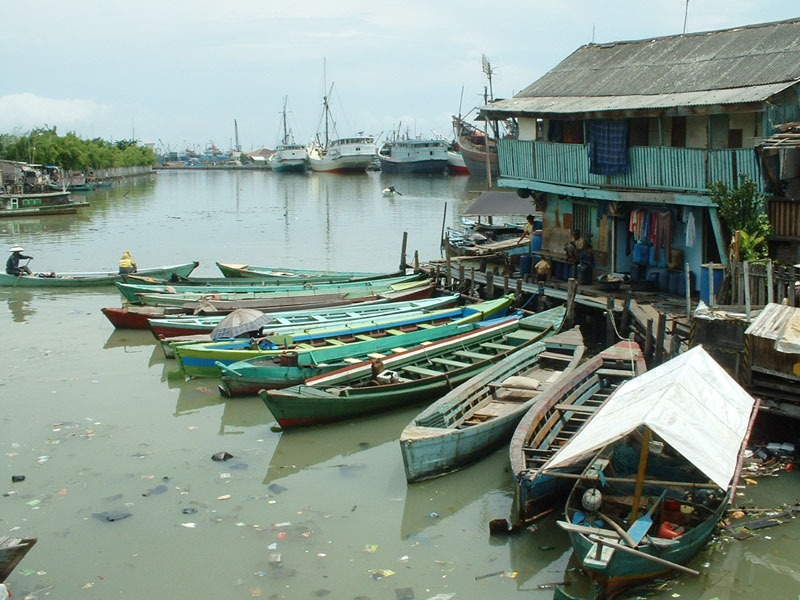
A view from the village that built up around the harbour. It is one of the oldest in Jakarta. It houses the laborers who load and unload the cargo and a community of local fisherman.

Thursday, February 02, 2006

Jakarta to Lombok

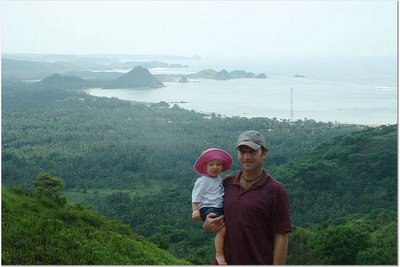
Scenic overlook of the south coast of Lombok. Notice all the breaks.


There are a lot of dogs in Lombok. On the hour long drive from the airport in Mataran to Kuta, I counted 52. I began my count a little more than half way into the trip because I was so impressed by how many dogs I was seeing. So the actual count of dogs that one might see on any given night driving from the capital to the south coast is around 100. These are not cuddly little lap dogs or romp about lab types – they are street dogs – scruffy, gnarly, skittish, tough and hungry. And they take the street thing very seriously. Several times, no, every time we came across a dog it was in the street and did not relinquish its real estate until the last possible moment. One time we actually lost in a heart stopping game of chicken as the dog in the street that we were baring down upon had found a particularly precious road kill and refused to budge from its claim. We were forced to swerve out of the way to avoid hitting the determined pup. I am not sure why Lombok has such a large population of dogs – Jakarta has very few – thus the silly amount of street cats.

I am reading How Soccer Explains the World a book that uses soccer as an analogy for globalization. Consider English soccer. Before the Premier League came into its own most English teams were made up of players from England with maybe some Scotts and a Welshman now and then. The advertisements adorning the field and the team kit were for English banks, lager and such. Winning the first division league title or the FA cup was the primary goal. This is no longer the case. Take Chelsea, the English Premiere League champs for example. The team roster includes a few Brits but primarily consists of players from all over the world including not only Europeans but several Africans and a few South Americans. The coach is Portuguese and the owner is a Russian oil magnate. Samsung, a Korean multinational giant, is the primary sponsor or at least the company that won the bidding war for the rights to the Chelsea jersey. In recent years Siemens (German) and Fly Emirates (United Arab Emirates) have adorned the Chelsea Blue. They play in a number of international tournaments like the Champions league and possibly the FIFA club world Championship.

This weekend I experienced another interesting example of globalization in the sports world – surfing in Lombok. I, an American from the US, staying at the Novotel, part of the French hotel giant Accor Group was picked up early in the morning by a surf guide and driver from Lombok, Indonesia driving a Japanese SUV. We drove to a small fishing village where we hopped on a small Lombok style fishing boat and after about a twenty minute boat ride arrived at the break called Grupuk. Here I was at a surf spot off the south coast of Lombok, an island barely known outside of Indonesia feeling pretty adventurous and Endless Summerish until I noticed the twenty Japanese guys bobbing up and down in the lineup. I was wearing a Dahui brand rash/sun guard made in Hawaii, and Quicksilver shorts from the US both purchased in Bali. Unfortunately I had left my board behind in Jakarta, an Australian board which I bought in south Java. But the board I was using truly represented the globalization of surfing - it was called a McBoard and had a big McDonald’s style “M” in the logo.

Another funny thing about surfing; if you don’t do it that often, you find out that all sorts of unexpected body parts are used because they hurt a lot the next day. It makes sense that your neck, shoulders, upper arms, would hurt from the paddling and that your stomach might be sore from rubbing on the board. But I forgot about my mouth hurting after not surfing for a while. Mouth? Indeed. When paddling for a wave I push down on the front of the board with my chin to force the board down. My chin has not been used as a speed boosting device for quite some time so the muscles in my jaw are rather sore. Sure do learn a lot of stuff from surfing – economic trends, anatomy ….

Lombok is advertised as the way Bali was 30 years ago. It is incredibly beautiful and has some of the most amazing beaches I have ever seen. Not to say Bali is not wonderful but certain parts of it are getting rather intense. Lombok is changing. Our driver today pointed out where the new international airport is to be built. Today it is rice fields, in a few years it will be bringing tourists from the world to discover Lombok. This is the idea – will it become Bali in 30 years time? Time will tell – and is that a good thing? Our driver certainly seemed to think so – he wants to make money. So consider checking out Lombok – just don’t get too intense.

Emmerson sporting the Gilligan look. This is the view from a new restaurant/hang out place. The owner(s)/operator(s) is/are Australian with a pretty nice piece of real estate. I can't recall the name but will post it later on. Worth checking out.
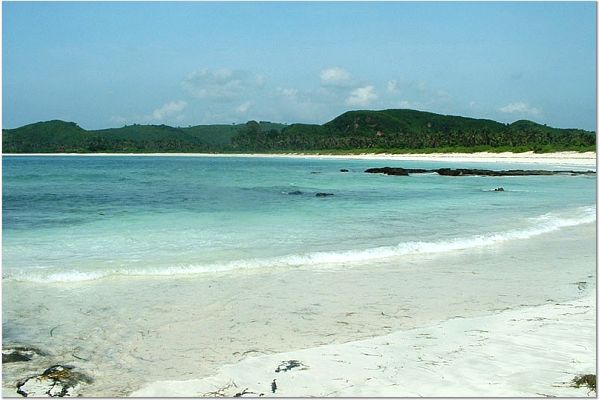
One of the many incredible beaches in Lombok - empty.